Nitrous Oxide During Labor vs Epidural and Why You Don’t Have to Choose Just One

Nitrous Oxide During Labor and What Every Expecting Mom Should Know
September 4, 2026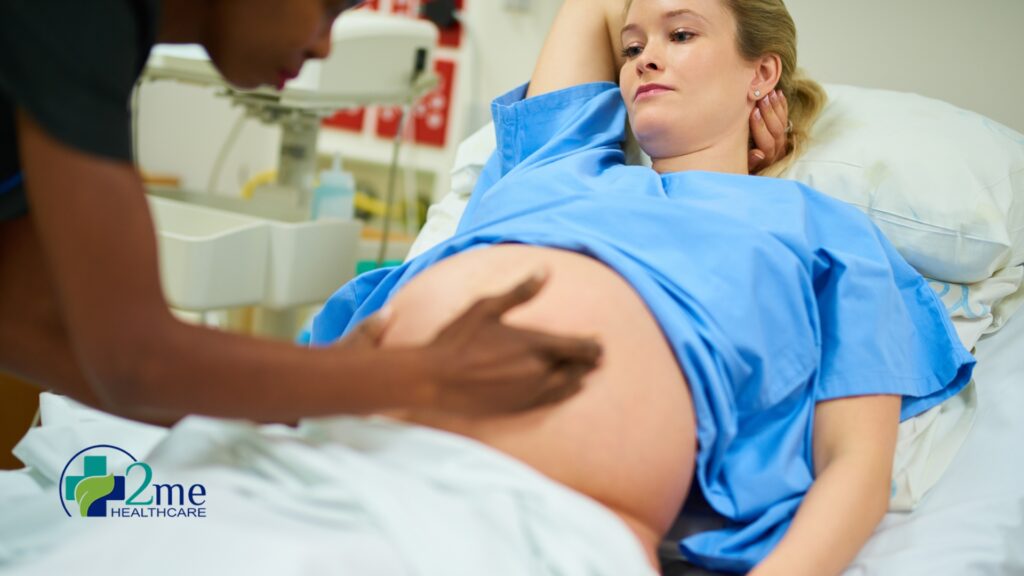
The nitrous oxide vs epidural question gets framed as a binary more often than the evidence warrants. Most women approach it as a single decision made before labor begins and held regardless of how labor unfolds. In practice, these two options serve different roles at different moments. They have distinct mechanisms, different trade-offs, and for many women, a genuinely complementary relationship.
What Each Option Actually Does
Understanding what each tool is designed to do makes the comparison more useful.
How Nitrous Oxide Works
Nitrous oxide is a 50/50 blend of nitrous and oxygen, self-administered through a handheld mask. It blunts pain perception without eliminating it and clears the body within minutes of removing the mask. It requires no IV, no catheter, and no restriction to bed. A woman using nitrous retains full mobility and consciousness throughout. Many describe the sensation as taking the edge off rather than removing the experience of labor entirely.
How an Epidural Works
An epidural is administered by an anesthesiologist via a catheter placed in the epidural space of the lower spine. It blocks sensation from roughly the waist down. Full effect takes 10 to 20 minutes. It requires an IV line, continuous fetal monitoring, and a urinary catheter. Mobility is significantly restricted, and pushing requires verbal coaching. On pain elimination, it is substantially more effective than nitrous. That effectiveness comes with a distinct set of clinical requirements.
The Nitrous Oxide vs Epidural Comparison
- Pain Relief and the Role of Control
Epidural analgesia provides significantly more complete pain relief than inhaled nitrous oxide. The Cochrane review found that epidurals provided better pain relief than any other method tested. Nitrous reduces anxiety and blunts pain perception rather than eliminating it. Even so, another study found nitrous users reported birth satisfaction comparable to epidural recipients. Sense of control shapes the labor experience as meaningfully as pharmacology.
- Mobility, Monitoring, and Freedom of Movement
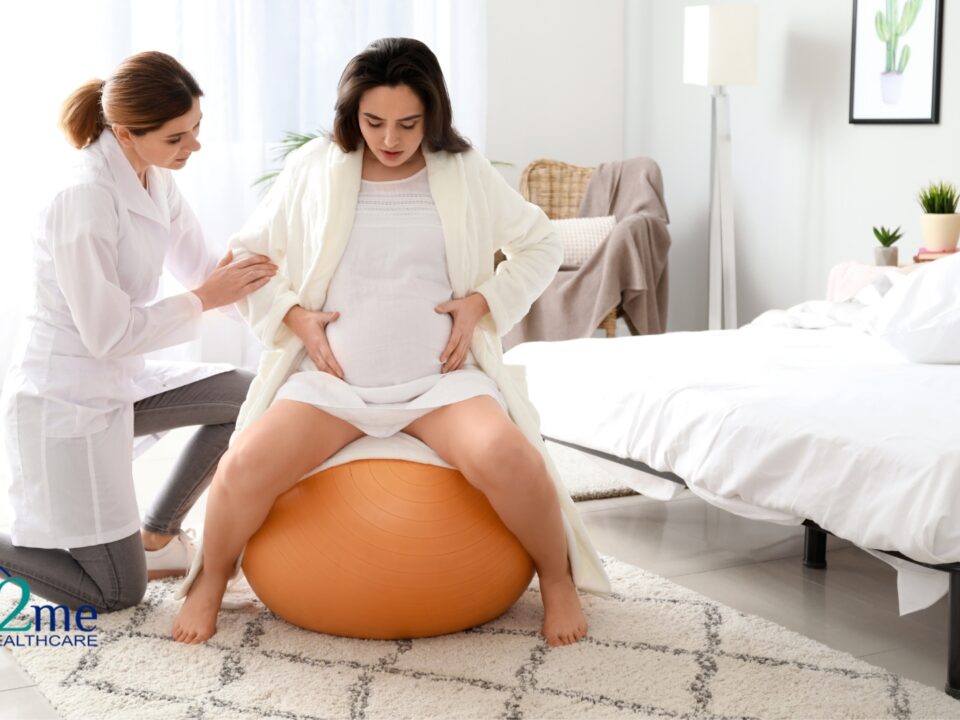
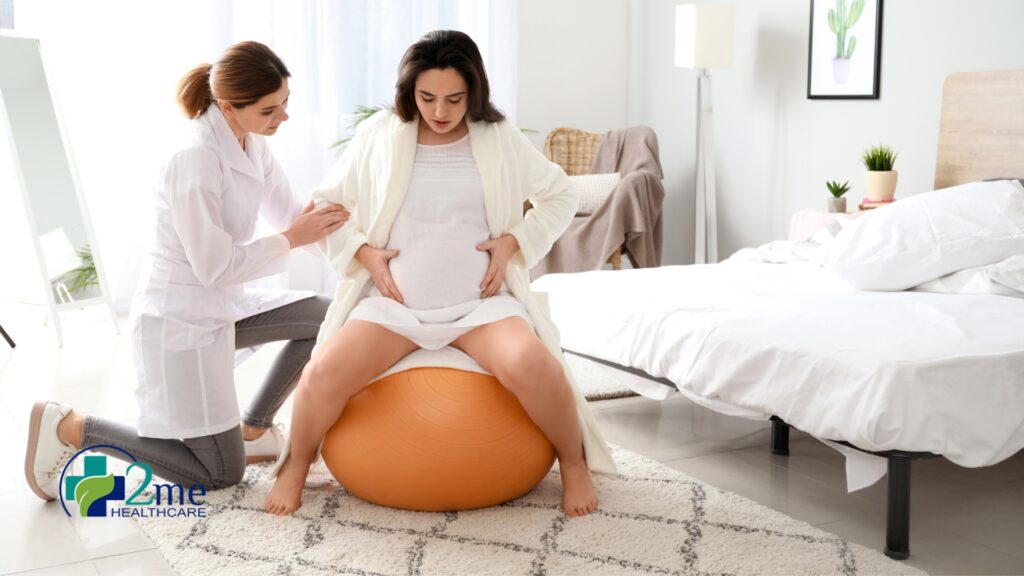
Nitrous oxide preserves full mobility throughout labor. A woman can walk, change positions, use a shower or tub, and move freely. An epidural significantly limits movement, and position changes require assistance once regional anesthesia is in effect. Continuous fetal monitoring is required alongside an epidural, independently restricting movement further. For women whose birth plans involve active positioning, hydrotherapy, or a birth ball, this distinction matters when choosing where to start.
- Onset, Side Effects, and Reversibility
Nitrous reaches peak effect in 30 to 60 seconds and is fully reversible on removing the mask. Side effects, including nausea, dizziness, and lightheadedness, resolve quickly on stopping. An epidural takes 10 to 20 minutes to establish and is not immediately reversible. Its side effect profile includes maternal blood pressure drop, fever, and in rare cases a post-dural puncture headache. Both are manageable in hospital settings when administered by trained providers.
Why the Choice Doesn’t Have to Be Final
The nitrous oxide vs epidural decision is rarely as fixed as it appears before labor begins. About 40% of women who begin with nitrous switch to an epidural before delivery, according to Richardson et al. 2017. Labor duration, fetal positioning, and exhaustion all evolve in ways that are difficult to predict. Switching is a natural response to new information. The more useful question is which option you want to try first, and whether your birth setting supports that flexibility.
When Using Both Makes Sense
Treating the nitrous oxide vs epidural question as a sequence rather than a fixed choice opens up a practical strategy. Many women use nitrous during early labor while mobility still matters, then transition to an epidural as intensity increases. Nitrous works especially well during the cervical check, IV placement, and epidural siting. These are often the most uncomfortable procedural moments before the epidural takes effect. Some women use it specifically to manage anxiety while waiting for the anesthesiologist.
When One Option Is the Better Starting Point
When an Epidural Is More Appropriate
Women managing preeclampsia or conditions where rapid surgical conversion may be needed benefit from an epidural catheter already in place. It shortens that timeline considerably. Women facing very long or stalled labors where exhaustion becomes a clinical factor also tend to benefit from sustained relief. Women who want complete pain relief from the outset and are comfortable with restricted mobility are good candidates.
When Nitrous Is the Better First Step
Women who want to remain mobile or use hydrotherapy before committing to analgesia are well served by starting with nitrous. Women planning a VBAC often prefer nitrous because it avoids the hemodynamic monitoring requirements that accompany neuraxial analgesia. Nitrous is also a strong choice in settings where an anesthesiologist is not immediately available.
Building a Flexible Pain Management Plan
Bring the nitrous oxide vs epidural conversation to your provider before labor begins. Build your plan around preferences rather than predictions, and name your conditions for switching. Understanding both options in advance, how they work, what they require, and when one may suit you better than the other, puts you in a stronger position regardless of how labor unfolds. OB2Me walks patients through every pain management option from early in pregnancy so that no decision gets made under pressure. To learn more about OB2Me’s concierge obstetric services, reach out to start that conversation.

Carson Ragan, CNM is a Certified Nurse Midwife with more than 25 years of experience in Labor & Delivery, Neonatal ICU, and women’s healthcare. After becoming a mother at a young age and experiencing the birth of her premature second child, she was inspired to pursue nursing and ultimately midwifery.
She earned her nursing degree from Columbus State University and graduated as an RN in 1999. After years of experience as an L&D and NICU nurse, charge nurse, educator, and clinician, she earned her graduate degree from Frontier School of Midwifery and Family Nursing in 2010 and became a Certified Nurse Midwife.
Her personal experiences as both a mother and healthcare provider inspired her vision for a more personal, convenient approach to women’s healthcare. She created a concierge model designed to give women more time, individualized attention, and quality care in the comfort of their home or office.
Outside of work, Carson enjoys spending time with her husband and five children, volunteering with her daughter’s volleyball teams, traveling, and scuba diving.